
Open-source Avionics Expansion Board & Flight Data Box
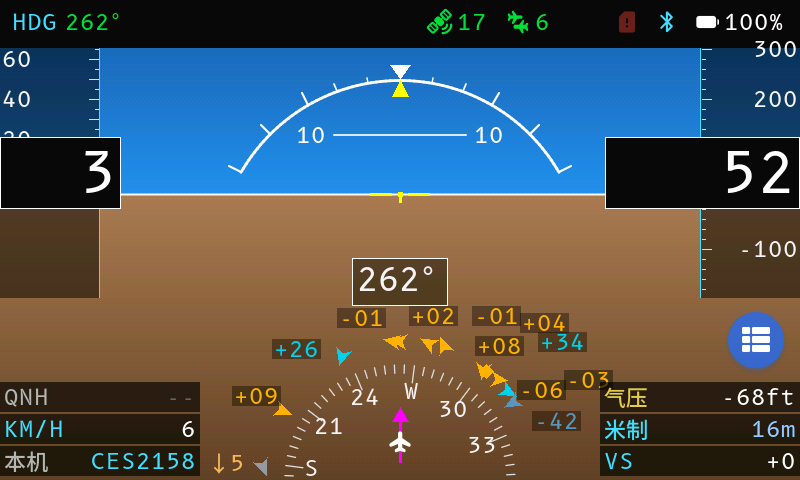
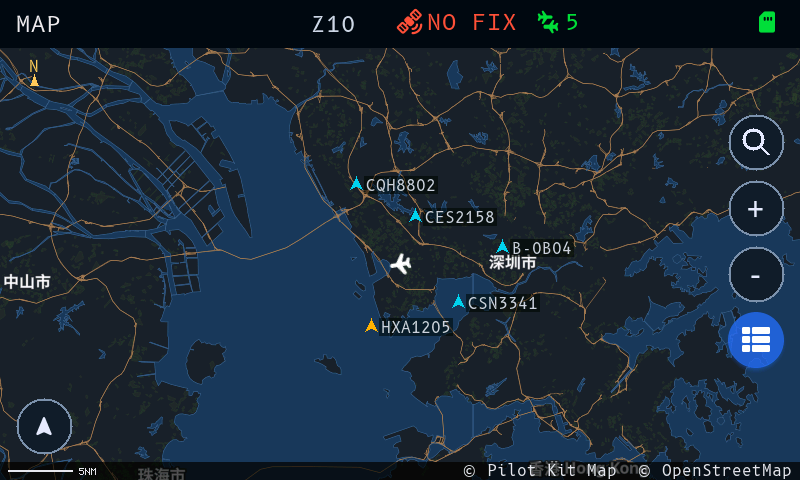
Pilot Kit Box receives 1090 MHz ADS-B, 978 MHz UAT, the 118–137 MHz airband, and four-constellation GNSS — all at once, each on its own receiver. It renders a G1000-style PFD, 360° traffic radar, offline aviation map, and airband radio on its 4.3-inch touchscreen, logs every flight to microSD, and streams GDL90 to your phone over BLE and Wi-Fi. Every bit comes off the air and onboard sensors — zero internet, fully open-source.
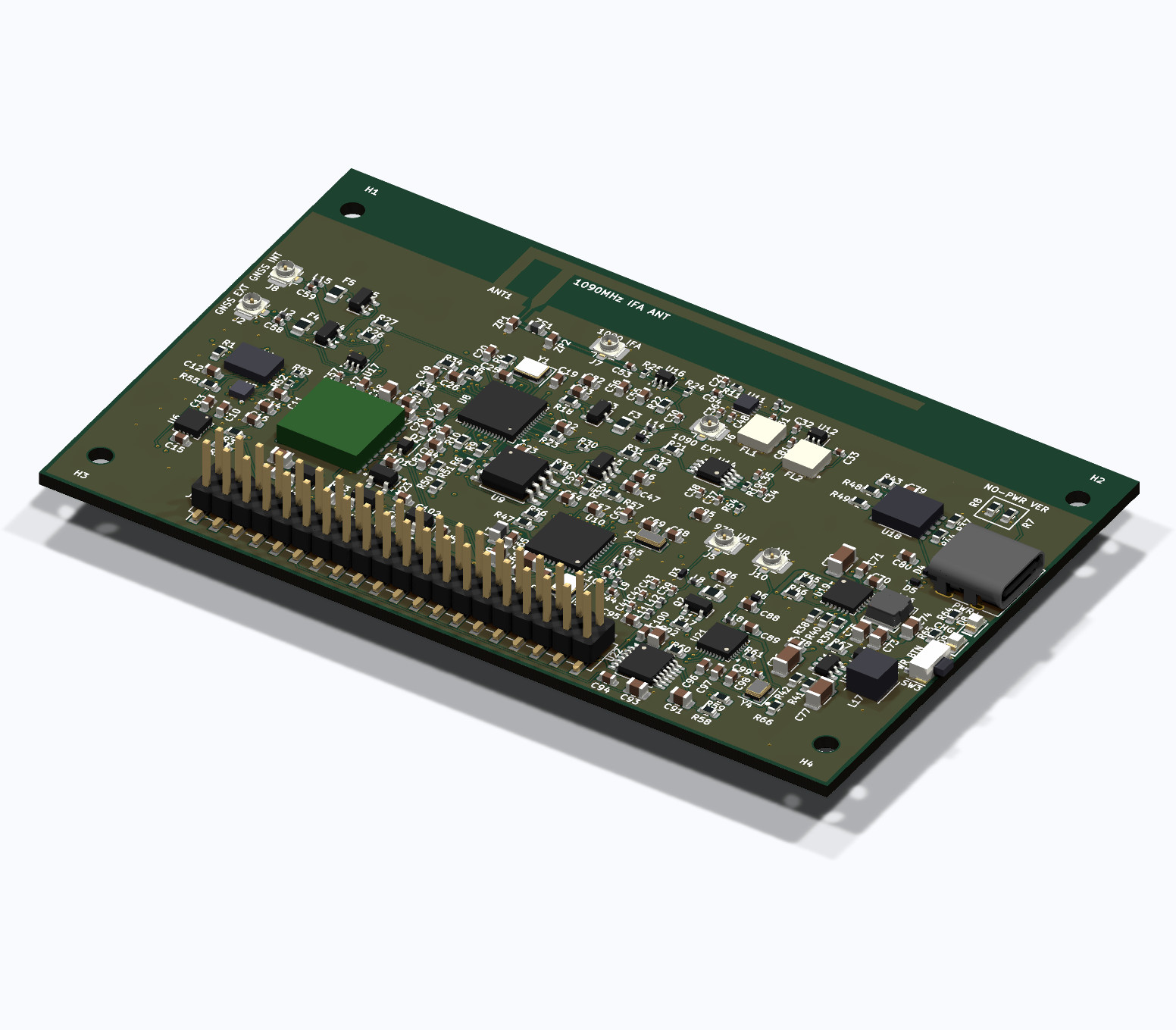
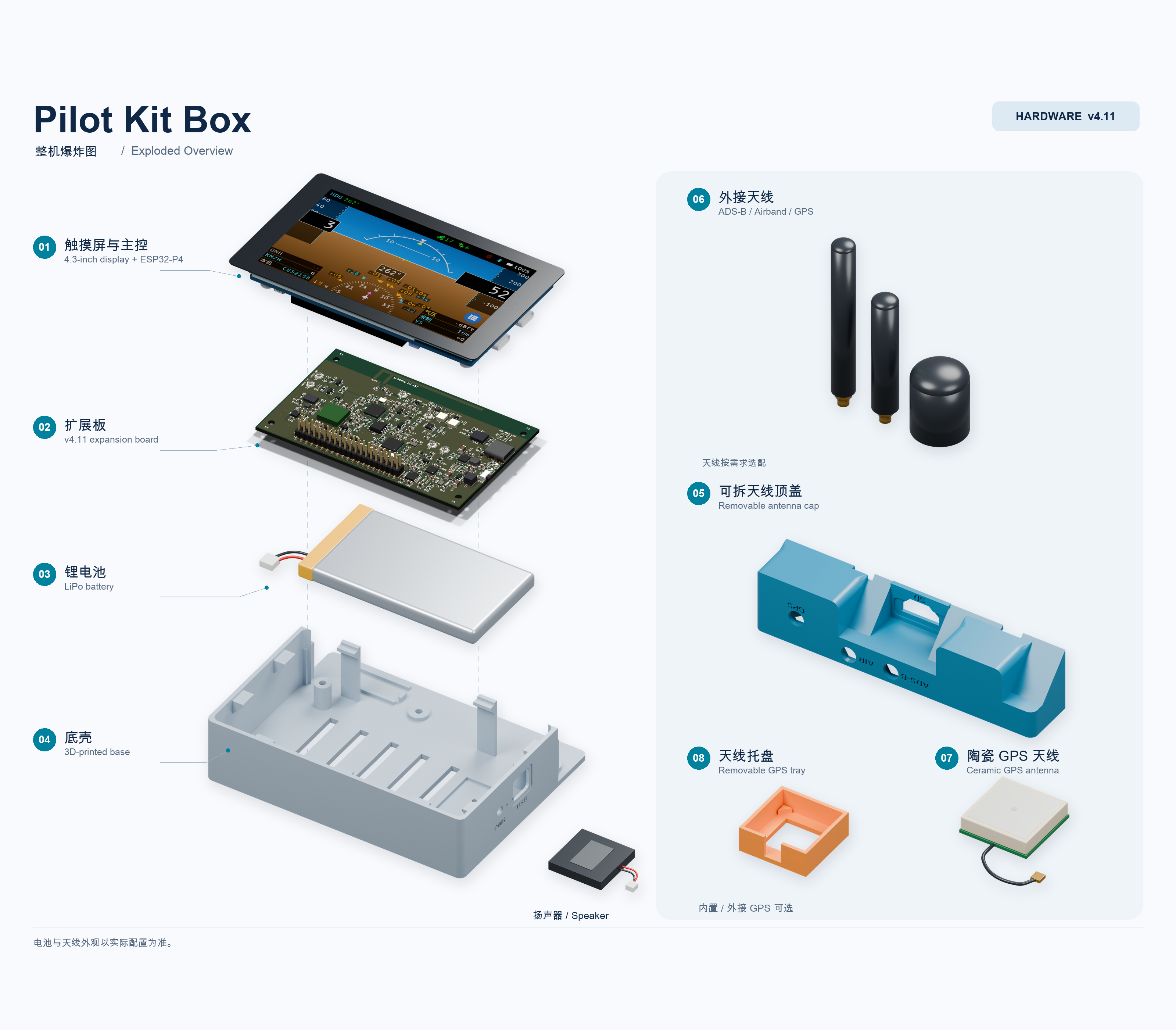
One board, from display to antenna
The 4.3-inch touchscreen, the avionics expansion board, the battery, and the printed base stack into a pocketable flight companion — with antennas and the GPS module configured to your needs.
One expansion board, a full avionics suite
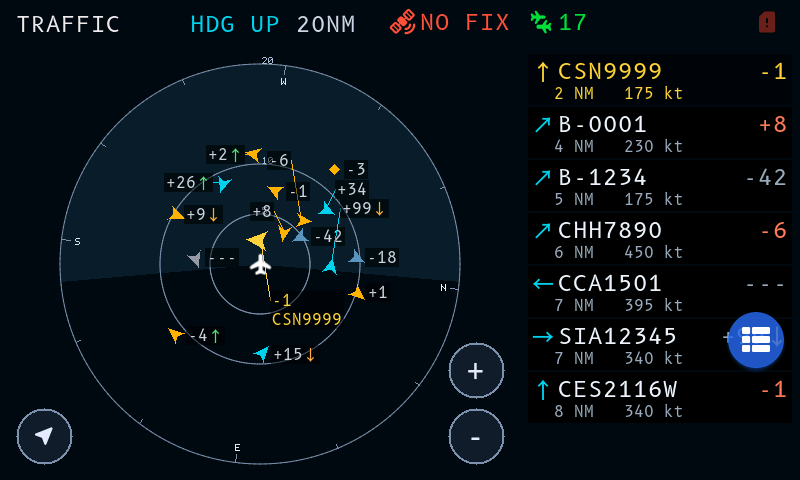
Situational awareness, radio listening, flight recording, attitude instrumentation, and deep Pilot Kit app integration — every link has its own receiver, all concurrent, all open-source.
Four chains receiving at once
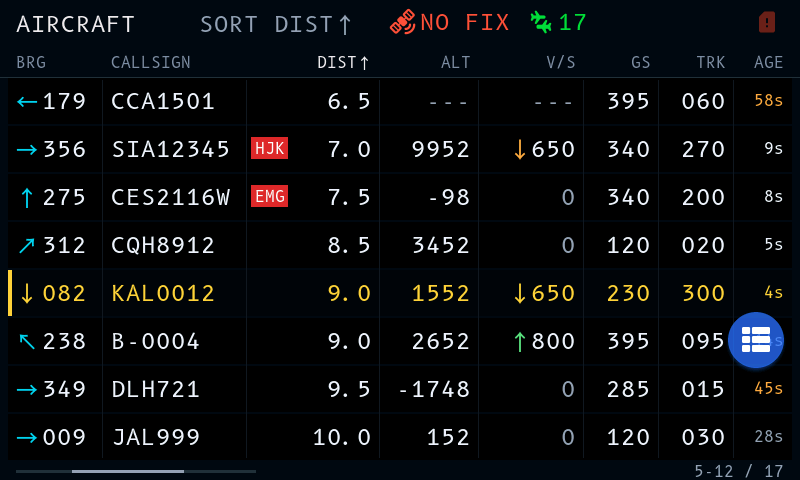
1090 MHz ADS-B, 978 MHz UAT, the 118–137 MHz airband, and GNSS — each with its own receiver, decoding concurrently into one fused traffic table. Unlike an SDR — one band at a time and power-hungry — this box receives all four at once.
Airband radio & recordings
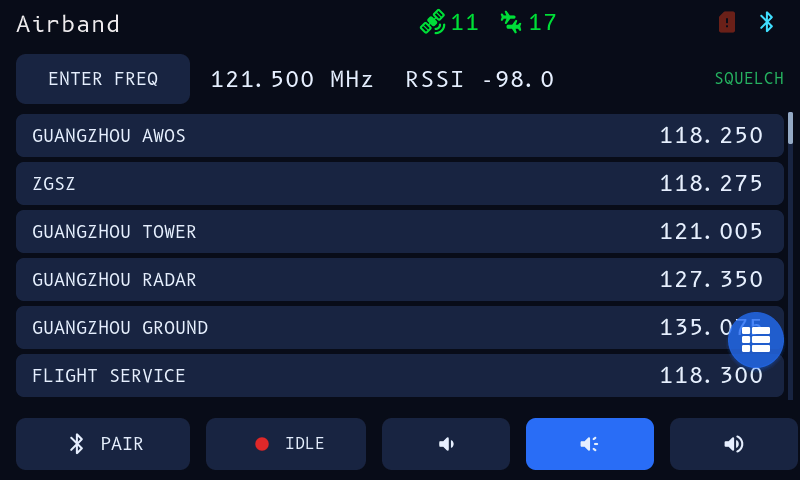
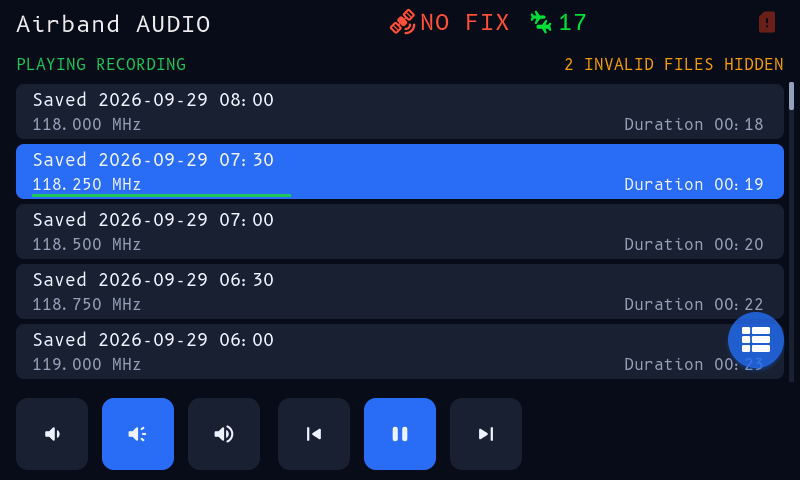
Listen to tower, approach, ATIS, and CTAF out loud on 118–137 MHz, with every transmission recorded to the microSD card and replayable from the device.
Full sensor suite
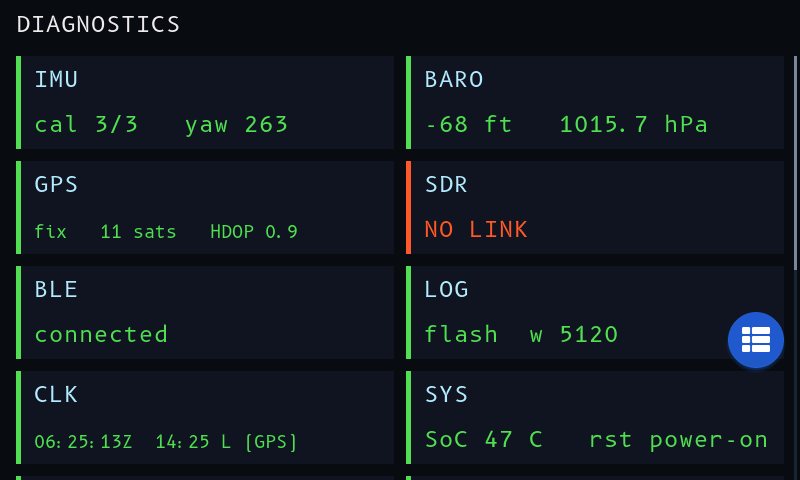
IMU attitude for the PFD horizon, barometric altitude and vertical speed, magnetometer, and 4-constellation GNSS (GPS/BeiDou/GLONASS/Galileo) with switchable internal patch or external antenna — beyond most handheld GPSs.
Real data, zero internet
Every aircraft, runway, and radio call on screen is received and decoded by the device itself — real-time, real, not cached from or resold by any online API. Flight logs and recordings save to microSD for logbooks, review, and sharing with the Pilot Kit app.
Open hardware, ready to build
A 6-layer, 100.1 × 62.1 mm integrated expansion board stacks onto the Waveshare ESP32-P4 carrier as a HAT, folding the dual receive chains, sensors, and power into a single board with an on-board 1090 MHz IFA antenna — no RTL-SDR dongle required. Every schematic, the KiCad project, and the full fabrication package are on GitHub.
- Host board
- Waveshare ESP32-P4-WIFI6-Touch-LCD-4.3 (ESP32-P4 32 MB + ESP32-C6, 4.3" 800×480 touchscreen)
- Expansion board
- V4.11, 6-layer 100.1 × 62.1 mm HAT, 231 placements / 506 vias
- Receivers
- 1090 MHz ADS-B + 978 MHz UAT + 118–137 MHz airband AM, independent chains
- Antennas
- On-board 1090 IFA (tunable) + four U.FL ports (1090 / 978 / GNSS / airband)
- GNSS
- 4-constellation (GPS / BeiDou / GLONASS / Galileo), internal patch / external switchable
- Sensors
- IMU attitude (100 Hz fusion), barometric altitude & vertical speed, magnetometer
- Display
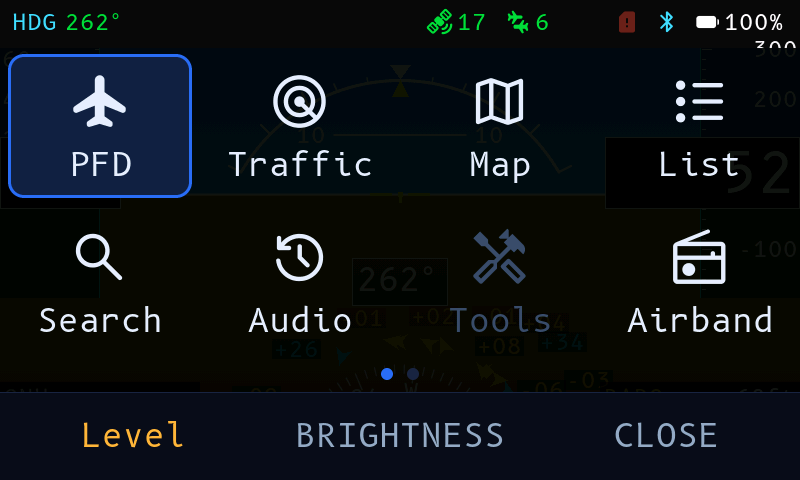
- 4.3" 800×480 MIPI-DSI touchscreen, G1000-style PFD / radar / map / airband UI
- Connectivity
- BLE GDL90 (ownship / traffic / heartbeat) today, Wi-Fi UDP GDL90 landing next; microSD logging
Instruments, radio, recording — all implemented
From dual-chain radio reception through traffic fusion, display rendering, and GDL90 streaming — all implemented and running on fabricated hardware today.
Reception & decode
- 1090 MHz Mode-S decode via RP2040 PIO, dump1090-derived
- 978 MHz UAT reception, fused into the same traffic table
- 118–137 MHz airband AM reception with I²S audio capture
- 4-constellation GNSS with PPS + RMC time discipline
Display & UI
- G1000-style PFD: attitude, HSI, altitude/speed tapes
- 360° traffic radar: heading-up / north-up, 2/5/10/20 NM
- Offline aviation map with airport / navaid / FIX overlay
- Touch navigation grid with full Chinese & English UI
Airband & recording
- Airband listening with channel list and direct frequency entry
- Recordings browsed and replayed on-device with volume control
- 1 Hz flight-track logging with flight-phase detection
- dump1090-compatible logs to microSD — pull the card and read it
Connectivity & data
- BLE GATT: GDL90 ownship / traffic / heartbeat / time sync
- GDL90 over Wi-Fi UDP in development — firmware work only
- Works with Garmin Pilot, ForeFlight, and other EFBs
- Two-stage clock discipline: BLE coarse + GNSS fine sync
Off-the-shelf parts, a fraction of commercial boxes
A stock Waveshare carrier board plus one integrated expansion board replaces a pile of modules, dongles, and wiring. Commercial portable ADS-B receivers run $200–700; building Pilot Kit Box costs a fraction of that. Actual cost varies with supplier and region.
vs commercial portable ADS-B receivers
Comparable cost
- Waveshare ESP32-P4-WIFI6-Touch-LCD-4.3 Carrier board with P4, C6, 4.3" touchscreen and touch controller
- Pilot Kit avionics expansion board V4.11 6-layer integrated board: dual receive chains, sensors, power — fabricate it or assemble it yourself
- microSD card Flight tracks, airband recordings and offline maps live on the card
- 3.7 V 4000 mAh Li-po battery Standard portable battery, 5+ hours of runtime (measured ~606 mA average draw)
- 3D-printed enclosure Printable split design with GPS tray — source files on GitHub
- Optional external antennas On-board 1090 IFA and internal GNSS patch are the defaults; U.FL ports when you need more
Pairs natively with the Pilot Kit App
Connect the Box to your phone over BLE in seconds. The Box streams GDL90 Ownship, Traffic, Heartbeat, and Time Sync over BLE GATT, and the Pilot Kit App subscribes automatically. Own-ship position, nearby traffic, barometric altitude, and precise timestamps flow continuously back to the App, enabling richer flight logs, full replay, deeper analysis, and easy sharing.
- GDL90 Ownship Traffic Heartbeat Time Sync
Inspectable, affordable, and yours to extend
Every layer of the stack — from dual-chain radio reception to traffic fusion to display rendering — is MIT-licensed and open for inspection, modification, and contribution.
Multi-chain reception
1090, 978, airband, and GNSS each get their own receiver — concurrent reception that single-band SDR setups simply cannot do.
Open implementation
The full chain — radio reception → Mode-S / UAT decode → state fusion → display rendering — is MIT-licensed and on GitHub. Read it, run it, modify it, or fork it.
Tight Pilot Kit integration
Captured traffic and flight-state data streams directly to the Pilot Kit app over BLE GATT, giving every flight richer logs, accurate replay, and easy sharing.
Room to grow
Wi-Fi GDL90 output, OTA A/B firmware updates, and new enclosure revisions are all on the roadmap — the platform is designed to keep evolving.
An open alternative to Stratux, Sentry, Garmin GDL, and uAvionix ping — but inspectable, low-cost, and DIY-friendly.
Safety & certification boundary
Pilot Kit Box is an open-source prototype and situational-awareness device.
This project does not represent FAA, EASA, CAAC, TSO, or other airworthiness certification.
Do not use it as a primary flight instrument, backup flight instrument, navigation source, or collision-avoidance system.
Flight decisions must remain based on certified avionics, installed instruments, visual scan, and applicable regulations.
Frequently asked questions
Open-source, low-cost, built to grow with Pilot Kit
Star the repo, follow along as the hardware evolves, or flash the firmware to your own hardware today.